Understanding the 4 Main Cabin Categories
Most cruise ships break their inventory into four primary types. Your choice dictates your price point and your "home base" experience.
Category | Best For... | The "Catch" |
Interior | Budget-focused travelers & heavy sleepers. | No natural light; can be disorienting. |
Oceanview | Travelers who want light without the balcony price. | Window is sealed; no fresh air. |
Balcony | The "standard" modern experience; fresh air seekers. | More expensive; can be windy at sea. |
Suites | Luxury seekers; families needing extra space. | High price point; perks vary wildly by line. |
Deep Dive: The Nuances of Windows and Views
Not all "Oceanviews" are created equal. In 2026, many lines are retrofitting older ships, making the terminology confusing.
Porthole: A small, circular window. Usually found on lower decks.
Picture Window: A large, rectangular window. This provides significantly more light than a porthole.
Obstructed View: Often sold at a discount. Your view may be partially or fully blocked by a lifeboat or ship structure.
Infinite Veranda (Celebrity Specific): A newer tech where the window lowers halfway to create a balcony-like opening. Great for space, but some travelers miss the "true" outdoor platform.
The "Guarantee" (GTY) Cabin: High Reward, High Risk
A Guarantee Cabin means you pick the category (e.g., "Guarantee Balcony") but the cruise line picks your specific room number.
The Pro: It is almost always the cheapest way to get into that category.
The Con: You could end up in a "noisy" location (under the gym or over the theater).
Strategic Location: Where to Stay (and Avoid)
The "Sandwich Rule"
The golden rule of cruise cabins: Stay between two decks of other cabins. * Avoid being directly below the Lido Deck (dragging chairs at 6 AM) or above the Nightclub (bass vibrations at 2 AM).
Beating Seasickness
If you are worried about motion, aim for Mid-ship and Low. This is the "pivot point" of the ship and experiences the least amount of tilt and roll. Avoid the extreme Forward (bow) or Aft (stern) cabins if you have a sensitive stomach.
Travel Advisor Pro-Tips
💡 Check the "Digital Twin": In 2026, use the cruise line's app or website to view 360-degree "Digital Twin" renderings of your specific cabin grade. It’s the only way to see exactly how much floor space you'll have.
💡 The Aft-Balcony Secret: Cabin balconies at the very back of the ship (Aft) are often 1.5x to 2x larger than side balconies for the same price. You get a stunning "wake view," though you will feel more vibration from the engines.
💡 Connecting Doors: Unless you are traveling with the people in the next room, avoid cabins with connecting doors. The soundproofing is significantly weaker than a standard wall.
The Interior: The Budget-Friendly Sanctuary
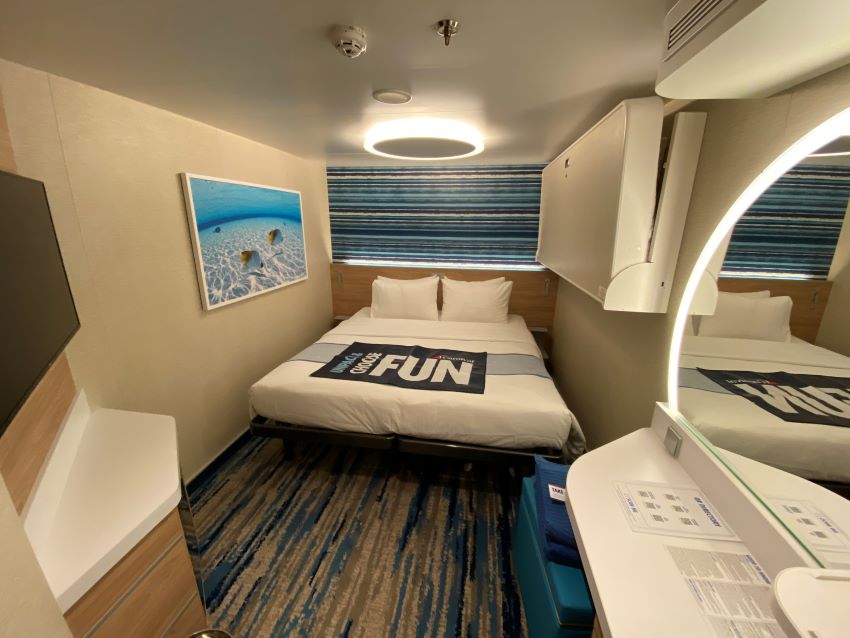
Often referred to as "Inside" cabins, these are located in the core of the ship with no windows to the outside world.
Average Size: 135 – 185 sq. ft.
Standard Amenities: Two twin beds (convertible to queen/king), vanity desk, small bathroom with shower, and flat-screen TV.
The 2026 Twist: Look for "Virtual Balconies" on lines like Royal Caribbean, which use high-definition screens to broadcast real-time views from outside the ship.
The Oceanview: A Window to the World
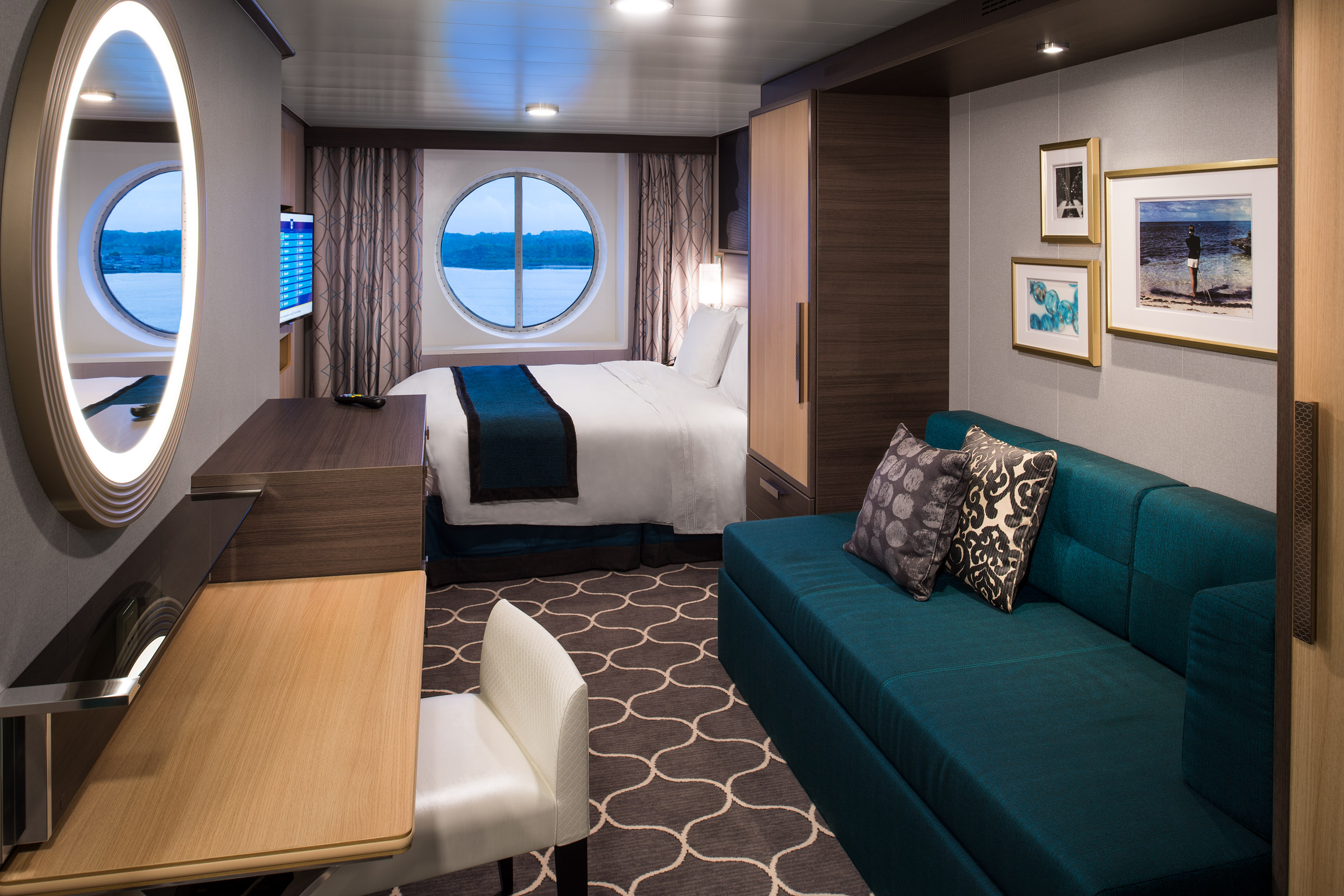
These cabins provide natural light and a view, but the windows are sealed shut.
The View Types:
Porthole: Small, round, classic nautical windows.
Picture Window: Large, rectangular panes that offer a much broader view of the horizon.
Standard Amenities: All interior amenities plus a small sitting area (usually a chair or small sofa).
The Balcony (Verandah): The Modern Standard
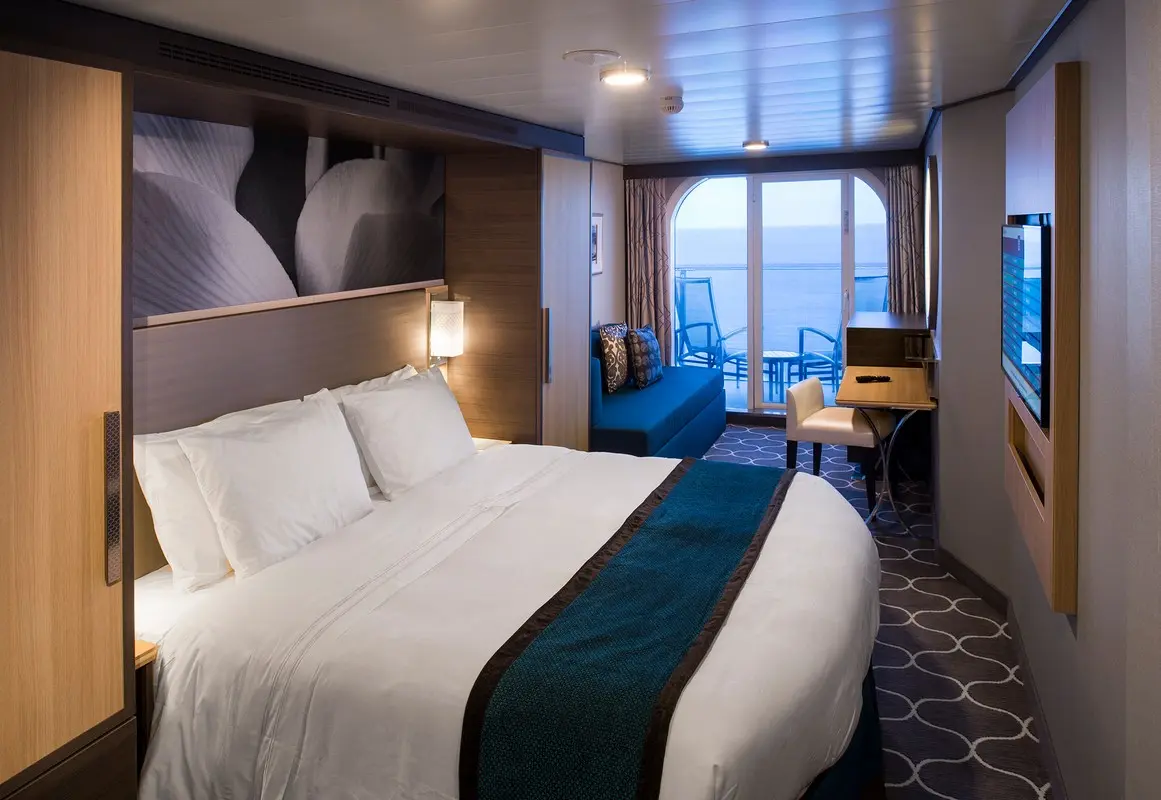
The most popular category, featuring a private outdoor space with floor-to-ceiling glass doors.
Average Size: 175 – 280 sq. ft. (including the balcony).
Standard Amenities: Private outdoor area with two chairs and a table, a full sofa inside, and upgraded bathroom finishes.
Specialty Types:
Cove Balcony: Built into the ship’s hull closer to the water—cooler, more private, and closer to the spray.
Infinite Veranda: (Celebrity Cruises) A sunroom-style balcony where the top window drops down at the push of a button.
Suites: The Ship-Within-A-Ship Experience
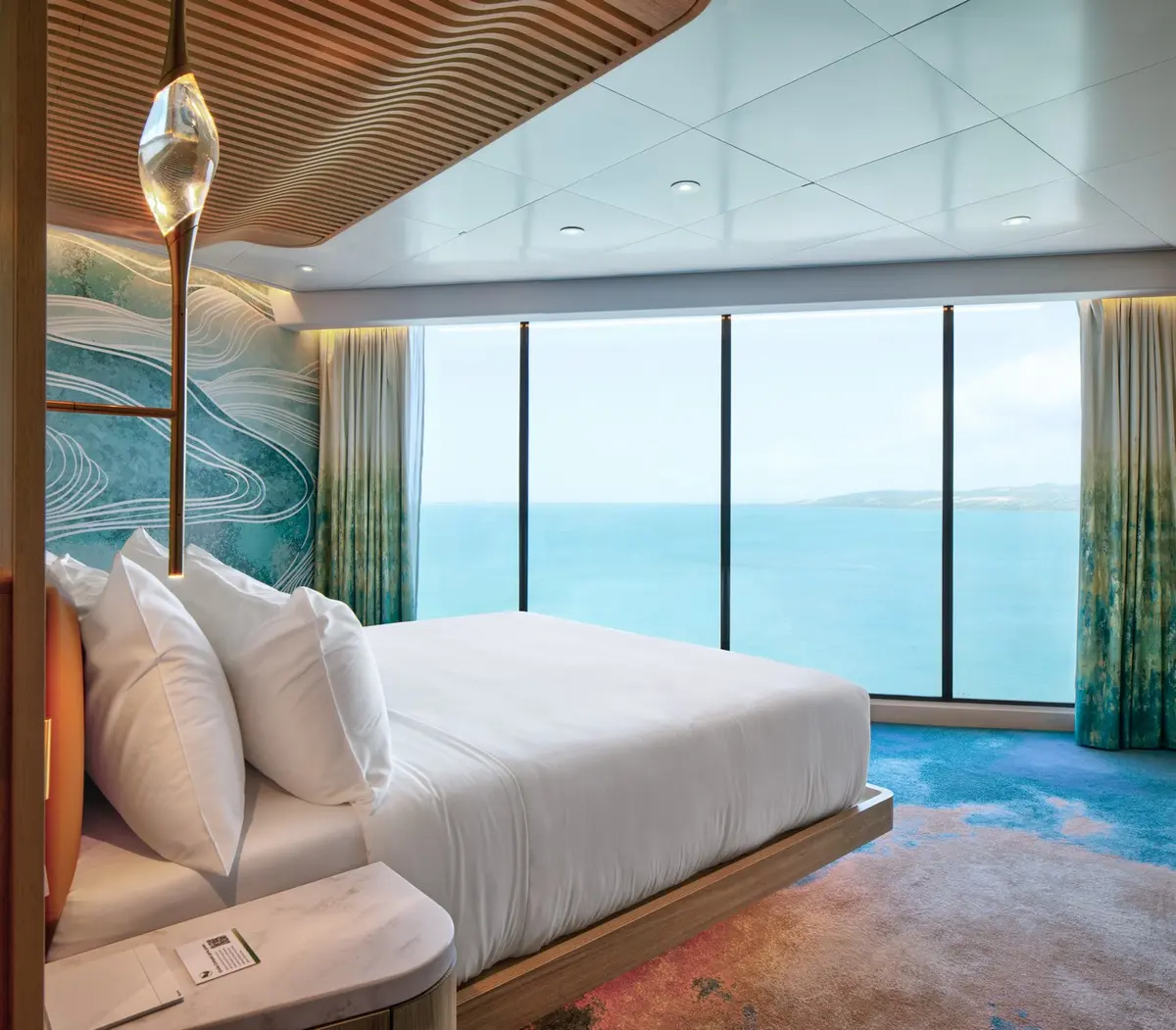
More than just a bigger room, suites usually come with a "VIP" lifestyle.
Average Size: 300 – 2,000+ sq. ft.
Exclusive Perks:
Dedicated Areas: Access to private sundecks (like Richard’s Rooftop on Virgin Voyages), private restaurants, and exclusive lounges.
Service: 24-hour butler service, "Genies," or dedicated concierges.
The "Extras": Priority boarding/disembarkation, complimentary laundry, and often included drink or Wi-Fi packages.
Comparison table
While these categories are standard across the industry, specific layouts, square footage, and amenities vary significantly by cruise line and ship class. For example, a "Suite" on a boutique ship like Virgin Voyages offers a vastly different experience than a "Suite" on a mega-ship like Royal Caribbean. Additionally, 2026 refurbishments are introducing new "Hybrid" categories like Infinite Verandas and Solo Studios across many fleets. Always consult your specific ship's deck plan before finalizing your selection.
Feature | Interior | Oceanview | Balcony | Suite |
Natural Light | No | Yes | Yes | Yes |
Fresh Air | No | No | Yes (Private) | Yes (Private) |
Priority Boarding | No | No | Rare | Always |
Sitting Area | Desk/Chair | Small Sofa | Full Sofa | Separate Living Room |
Butler Service | No | No | No | Usually |
Cruise Cabin Category Room Type FAQ
Is it worth paying extra for a balcony?
This depends on your itinerary. If you are sailing in Alaska or the Norwegian Fjords, a balcony is highly recommended for private glacier viewing. However, on a port-intensive Mediterranean cruise where you are off the ship 10+ hours a day, an Interior or Oceanview may be a better way to save your budget for excursions.
What is a "Single Supplement" and can I avoid it?
Most cabins are priced based on "double occupancy." If you travel alone in a standard room, you often have to pay nearly double (the supplement). To avoid this, look for ships with dedicated Solo Studios (common on Norwegian Cruise Line and Virgin Voyages), which are priced specifically for one person.
Are lower decks more likely to flood?
No. Cruise ships are engineering marvels designed with watertight compartments. While lower decks are closer to the waterline, they are perfectly safe. In fact, many travelers prefer lower decks because they experience the least amount of motion during rough seas.
How can I tell what is "above" my room?
Don't rely on the cabin description alone. You must look at a Deck Plan. Find your room number, then look at the deck directly above and below yours. If you see a blank space, it’s often a "service area" or galley (which can be noisy). If you see a blue area, it’s likely the pool deck (chairs scraping). Aim for a "sandwich" of cabins for the quietest stay.
Can I change my cabin after I book?
Yes, provided there is availability. If you booked a specific cabin and see a better one available for the same price, your Travel Advisor can usually swap you. If you booked a Guarantee (GTY) rate, however, you generally cannot change your room once the cruise line assigns it without paying a fee or upgrading to a higher category.
Ready to find your perfect match?
Cabin layouts change with every ship and deck. Don't leave your vacation comfort to chance—let’s find the exact room that fits your style and budget.
Plan My CruiseRelated guides

The Ultimate Alaska Cruise Packing List
Everything you need to pack for a warm, dry, and unforgettable Alaskan adventure.
Checking in to your Disney Cruise
A walkthrough of online check-in (website and Disney Cruise Line Navigator app), Port Arrival Times, and what to bring.