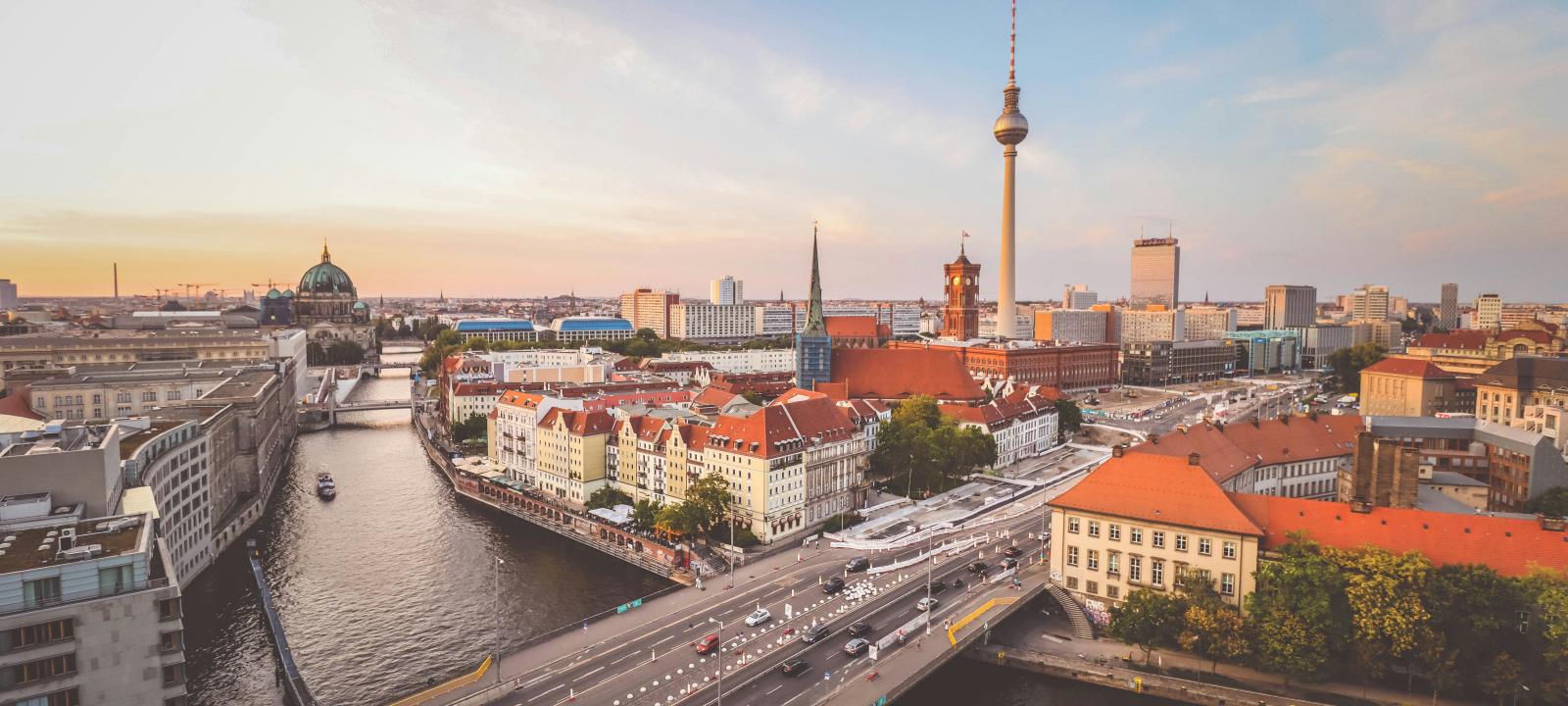
Berlin is arguably the most consequential LGBTQ+ city in Europe — the birthplace of the modern gay rights movement, home of the world's oldest continuously gay neighborhood (Schöneberg, around Nollendorfplatz), and the global capital of techno, leather, and kink. With Christopher Street Day drawing hundreds of thousands every July, Folsom Europe taking over Schöneberg every September, and weekend club marathons running 60-plus hours nonstop, Berlin offers a depth and freedom that few destinations on earth can match.
What sets gay Berlin apart from other European capitals is the layered nature of the scene. Amsterdam is canal-side and compact; Madrid is sun-soaked and concentrated in Chueca; Berlin spreads across an old gay village in the west (Schöneberg), a politically engaged queer scene in the south (Kreuzberg), and a techno-temple belt in the east (Friedrichshain). You can build very different trips here: a classic bar-and-leather week in Schöneberg, a club marathon weekend in Friedrichshain, or a culture-and-history trip anchored on the Schwules Museum and the Memorial to Homosexuals Persecuted Under Nazism.
This gay Berlin travel guide covers where to stay, where to drink, where to dance, and which weeks of the year deliver the experience you actually want.
At a Glance
Why Berlin Is a Standout LGBTQ+ Destination
Few European cities have leaned into being a gay destination as deeply as Berlin. Decades of openness, a ferocious nightlife economy, and a long historical memory make it feel less like a place that welcomes you and more like a place that built its identity around you.
The world's oldest gay village. Schöneberg around Nollendorfplatz has been an out, openly gay district since the 1890s — the same neighborhood Christopher Isherwood wrote about in The Berlin Stories, the source material for Cabaret.
Living history of Weimar queer culture. The legendary Eldorado cabarets at Motzstraße 15 and Lutherstraße 31/32 — closed by the Nazis in 1932 — sat on the same blocks where Prinzknecht and Hafen still operate today.
The Schwules Museum at Lützowstraße 73. The world's largest and oldest dedicated LGBTQ+ museum, founded 1985, with rotating exhibitions and an archive of more than 1.5 million documents.
Folsom Europe. The biggest leather and fetish street fair in Europe shuts down Fuggerstraße every September; 2026 dates are September 10–13 with the main fair on Saturday September 12.
Easter Berlin (Berlin Leather & Fetish Week). Six days of fetish programming around Nollendorfplatz; 2026 dates April 1–6, including the Mr. Fetish Berlin election and the Spree fetish boat cruise.
Berghain and the techno-queer ecosystem. The most famous club on earth started as a gay party (Snax) and remains majority-queer; Lab.Oratory, the men-only fetish club in the same building, is regularly cited as Europe's most extreme.
Christopher Street Day. One of Europe's largest Pride marches — hundreds of thousands of attendees and 75+ floats — running from Mitte through Schöneberg to the Brandenburg Gate. 2026 falls Saturday July 25.
The first national memorial to LGBTQ+ Holocaust victims. The Memorial to Homosexuals Persecuted Under Nazism (Tiergarten, opened 2008) sits across the street from the Memorial to the Murdered Jews of Europe — a remarkable acknowledgment few countries have made.
The Gay Hubs of Berlin
Gay Berlin is not concentrated in a single neighborhood. It spreads across an old gay village in the west, an alternative queer scene in the south, and a techno belt in the east — the three corners are the key to choosing where to stay.
Schöneberg
Centered on Nollendorfplatz with U1, U2, U3, and U4 converging, this is the oldest continuously gay neighborhood in Europe. Walk Motzstraße and Fuggerstraße and you'll see rainbow-painted curbs, the city's pink granite memorial plaque, and the tightest concentration of gay bars, cafes, hotels, and saunas anywhere in Berlin.
Best for: first-timers, traditional gay nightlife, leather and fetish, men who want to walk between bars without thinking about transit.
Friedrichshain
The home of Berghain, ://about blank, and the warehouse club belt along the Spree. Less about "gay bars" and more about "queer-coded techno temples" where the door selection is real and the night doesn't end on Saturday — it ends on Monday.
Best for: techno heads, club marathoners, repeat visitors who already know Schöneberg.
Kreuzberg and Neukölln
East Kreuzberg around Kottbusser Tor is the heart of FLINTA*, dyke, and gender-bending nightlife — Möbel Olfe and Roses are anchors. Cobblestoned, Turkish-influenced, scruffy, and politically engaged.
Best for: lesbians, queer and nonbinary travelers, alternative and mixed crowds, late-night bars rather than mega-clubs.
Where to Stay
Berlin offers more gay-targeted lodging than any other European city, with most of the standout properties clustered in or adjacent to Schöneberg.
Axel Hotel Berlin
An adults-only "hetero-friendly" gay hotel right at the edge of Schöneberg, three blocks from Nollendorfplatz. Rooftop pool and bar in summer, gym, and the brand's signature Sky Bar. Berlin's most reliable choice for travelers who want to stay inside the gay scene.
Tom's Hotel
A small, all-gay-male apartment hotel directly above the former Tom's Bar (the bar is now Boyberry). Self-catering studios with kitchens, a guest discount pass for nearby saunas and clubs, and the most central location in the gay village. Best for travelers who want walk-everywhere convenience over luxury finishes.
Hotel Q!
Iconic GRAFT-designed boutique just off Kurfürstendamm — 77 rooms with the famous flowing bed-and-bathtub layout, a small spa with Finnish sauna, and the Fox Bar. LGBTQ+-welcoming rather than gay-targeted; ideal for couples who want a design-forward base near shopping and a 10-minute U-Bahn ride to Schöneberg.
25hours Hotel Bikini Berlin
Playful "urban jungle" themed property overlooking the Tiergarten and the monkey enclosure of the Berlin Zoo, with the Monkey Bar rooftop drawing a packed see-and-be-seen crowd. Walking distance to Tiergarten, the Memorial to Homosexuals, and KaDeWe; a short cab to Schöneberg.
Sir Savigny Hotel
Stylish 44-room boutique on Savignyplatz with mid-century-meets-graphic-novel decor and a quiet residential setting. Good for repeat visitors who already know the gay scene and want a calmer base, with strong restaurants and the S-Bahn at the door.
Michelberger Hotel
Quirky design hotel directly opposite Warschauer Straße station — ten minutes' walk to Berghain, five to RAW-Gelände. The lobby and restaurant are a scene of their own. Best for clients prioritizing techno nights over Schöneberg bar-hopping.
Bars, Clubs, and the Berlin Scene
Berlin's gay nightlife splits into three layers: the classic Schöneberg bars and cruising clubs in the west, the dance-floor temples of Friedrichshain in the east, and the queer-leaning dive bars of Kreuzberg and Neukölln in between. Most travelers spend at least one night in each.
Prinzknecht
The defining Schöneberg gay bar — tall ceilings, brick walls, an older mixed crowd of locals and travelers, with a sidewalk terrace that becomes the de facto street meeting spot during Folsom and CSD. "Come as strangers, leave as friends" is the motto, and it's accurate.
Hafen
Founded 1994, warm wood-clad neighborhood bar two doors down from Prinzknecht; bartenders genuinely remember faces. Open Mon–Thu 6 pm–3 am, Fri–Sat until 5 am. The first stop on any classic Schöneberg crawl.
Heile Welt
Small, candle-lit, more cocktail lounge than cruise bar, with a quieter early-evening vibe and a queerer (less gay-male-only) mix. Open daily 7 pm–3 am.
Connection Club
Weekend dance club next door to Prinzknecht with a notorious cruising basement called the "Twilight Zone." Not Berghain-level, but the most accessible cruise-and-dance combo in the gay village.
Boyberry Berlin
The men-only cruise bar that opened in March 2024 in the former Tom's Bar space — owned by the Barcelona/Madrid Boyberry group. Darker, sexier, and more cruising-focused than Hafen or Prinzknecht; the spiritual successor to Tom's.
Berghain, Panorama Bar, and Säule
The most famous techno club on earth; Klubnacht opens Saturday around midnight and runs continuously into Monday morning. No phones, strict door (Sven Marquardt is still selecting), and a 2023 Funktion-One rebuild on the main floor. Originally a gay party (Snax) and still a queer institution.
Lab.Oratory
Men-only fetish/sex club in Berghain's basement with its own entrance — slings, glory holes, dark rooms, themed nights like Naked, Yellow Facts, and Fist. Cash only, no perfume, no phones. Goes off during Folsom Europe weekend.
KitKatClub
Fetish/techno club in Mitte, mixed-orientation but very queer-friendly, with a strict dress-up door (latex, leather, lingerie, or skin — denim and street clothes get rejected). Best known for CarneBall Bizarre on Saturdays.
://about blank
Collectively run, politically engaged techno club at Ostkreuz with two floors and a beloved garden in summer. Strong queer and anti-fascist programming including parties from collectives like Buttons. Less famous than Berghain, easier to get into, equally serious about the music.
Möbel Olfe
A former East German furniture store turned dive bar at Kottbusser Tor — Tuesday is FLINTA* night, Thursday is the queerest night, weekends mix everyone. Cheap Polish beer, raw construction interior, no pretensions. The single best entry point to Kreuzberg's queer scene.
Mutschmann's and Scheune
The two veteran Schöneberg leather/bear bars. Mutschmann's is the harder-edged of the pair (leather, rubber, uniform crowd, dress-up door for some events); Scheune is the friendly cigar-and-beer bear hangout one block over.
Tipsy Bear
The drag and karaoke headquarters of Prenzlauer Berg — drag shows every weekend, Monday quiz, regular queer markets. Friendlier and lower-stakes than the Friedrichshain clubs; the only major LGBTQ+ venue in north Berlin.
Roses and Silver Future
Two campy, mixed-queer bars worth pairing in a single Kreuzberg/Neukölln night. Roses is faux-fur walls, 80s–90s pop, packed shoulder-to-shoulder; Silver Future bills itself as a meeting place for "Kings, Queens and Criminal Queers" and hosts the strongest local drag bookings outside Tipsy Bear.
Daytime and Culture
Beyond the bars, Berlin rewards travelers who plan around the LGBTQ+ history that the city wears openly — and the broader cultural sights that pull every visitor regardless of orientation.
Schwules Museum
The world's oldest LGBTQ+ museum, founded 1985, at Lützowstraße 73 in Tiergarten. Rotating exhibitions and a research archive of 1.5 million documents. €10/€5. Open Mon, Wed, Fri 12–6; Thu 12–8; Sat 2–7; Sun 2–6.
Memorial to Homosexuals Persecuted Under Nazism
A concrete cuboid by artists Elmgreen & Dragset on the eastern edge of Tiergarten (opened May 27, 2008), with a viewing window onto a continuously running film of same-sex couples kissing — the film changes every two years. Across the street from the Memorial to the Murdered Jews of Europe.
Nollendorfplatz Station and the Pink Granite Plaque
The U-Bahn station entrance carries the pink memorial plaque listing the categories of LGBTQ+ people murdered by the Nazis; outside, you'll see the rainbow-painted curbs that mark the gay quarter.
East Side Gallery
The longest preserved stretch of the Berlin Wall, 1.3 km, painted by 118 artists — including the famous Brezhnev/Honecker kiss ("My God, Help Me to Survive This Deadly Love"). Free, open-air, in Friedrichshain along the Spree.
Tiergarten and the Siegessäule
The park's south-central section between the Siegessäule and Tiergartenstraße has been a daytime and evening cruising area for over a century; the Siegessäule (Victory Column) climb is 285 steps to a 360-degree view and gives its name to Berlin's free monthly LGBTQ+ magazine.
Berlinale and the Teddy Award
Mid-February (12–22 in 2026) — the world's oldest queer film prize, celebrating its 40th anniversary in 2026 with the ceremony at Volksbühne on February 20. Adds a serious arts-and-culture layer to a winter trip.
When to Visit
Berlin runs cold in winter and reliably mild from late spring through early fall, with the LGBTQ+ event calendar shaping the busiest weeks.
Peak Season
Late June to July.
Pride and CSD month, longest days, warmest weather (highs in the upper 70s F), highest hotel prices. Book Schöneberg six months ahead for CSD weekend.
Event Shoulder
Early September and early April.
September brings Folsom Europe (Sept 10–13 in 2026) plus mild dry weather and thinner crowds; April brings Easter Berlin / Berlin Leather & Fetish Week (April 1–6 in 2026). Both are the sweet spot for travelers who want a major event without the CSD price spike.
Off Season
November to March.
Cold (lows around 30 F), dark (sunset by 4 pm in December), often gray, but cheapest hotels, no club queues, full operating schedule for indoor venues. February's Berlinale and Teddy Award is the one strong reason to come in winter.
Key LGBTQ+ Events
Berlinale and Teddy Award: February 12–22, 2026 (Teddy ceremony Feb 20 at Volksbühne — 40th anniversary).
Easter Berlin / Berlin Leather & Fetish Week: April 1–6, 2026.
Lesbian and Gay City Festival (Stadtfest Schöneberg): July 18–19, 2026 (weekend before CSD).
Christopher Street Day Berlin: Saturday July 25, 2026; theme "Haltung ist hot." Friday rally at Brandenburg Gate.
WHOLE Festival: July 17–20, 2026 at Ferropolis, ~90 minutes outside Berlin (queer collectives Pornceptual, Gegen, Cocktail d'Amore curate).
Folsom Europe: September 10–13, 2026; main street fair Saturday September 12 on Fuggerstraße.
Hustlaball Berlin: October 15–18, 2026; main party Friday October 16 at KitKatClub.
Plan and Pack
Pre-trip Checklist
Government-issued ID and passport (passport required for U.S. travelers)
Layered clothing — Berlin weather flips fast; even July evenings can drop to the 50s F
Comfortable walking shoes — cobblestones in Kreuzberg and Mitte are unforgiving
A black outfit (boots, jeans, fitted black tee or harness) for any techno club
A second, more imaginative club outfit for KitKat — latex, leather, lingerie, or skin
Compact rain shell — June and August are the wettest months
Cash in small bills — clubs, fetish venues, and many bars prefer cash
Coat-check-friendly small bag — Berghain and Lab.Oratory don't allow large bags inside
Water bottle and electrolyte tabs for marathon nights
Type F European two-prong travel adapter
Sample 4-Day Itinerary
A balanced first-time itinerary that maps the gay village by foot and adds one classic Berlin club night. Stretch to five days if you are timing a Folsom Europe, CSD, or Easter Berlin weekend.
- 1Arrival and Schöneberg OrientationCocktails and the gay village.
Land at BER, drop bags in Schöneberg or Charlottenburg, and walk the Motzstraße/Fuggerstraße loop in the late afternoon. Coffee at Romeo & Romeo or Café Berio, then dinner and a slow first night at Hafen → Heile Welt → Prinzknecht to map the gay village by foot.
- 2Daytime Culture, Classic Schöneberg NightFrom the Memorial to Mutschmann's.
Morning at the Schwules Museum, then walk to the Memorial to Homosexuals Persecuted Under Nazism through Tiergarten, ending at the Brandenburg Gate. Late lunch at KaDeWe's sixth-floor food hall, afternoon nap, then dinner in Schöneberg and a leather-leaning night ending at Mutschmann's or Boyberry.
- 3Friedrichshain and the Techno ExperienceEast Side Gallery to Berghain.
Walk the East Side Gallery in the morning, lunch at Markthalle Neun (Street Food Thursdays in Kreuzberg if timing works). Power nap. Dinner in Friedrichshain around Boxhagener Platz, then queue for Berghain — or for first-timers, ://about blank as the friendlier alternative.
- 4Lesser-Known Berlin and DepartureKreuzberg, Neukölln, and a goodbye drink.
Brunch in Kreuzberg, slow walk through Görlitzer Park to Möbel Olfe at Kotti for an early aperitif, then Roses or Silver Future for one last campy nightcap before transit to BER. Save the Tiergarten Siegessäule climb (285 steps, 360-degree view) for a clear afternoon.
Frequently Asked Questions
Is Schöneberg or Friedrichshain better for first-timers?
Schöneberg every time. It's walkable, dense, gay-male-focused, and forgives mistakes; Friedrichshain assumes you already know what Berghain is and how to fail at the door without sulking.
What's the deal with Berghain's dress code?
There isn't a written one, but black, worn-in, and confident is the safe bet. Bouncer Sven Marquardt has said publicly he's looking for authenticity, not fashion. Don't go in a stag group, don't speak loudly in English in line, don't take photos, don't ask anyone what time it is inside.
Is Berlin safe for LGBTQ+ travelers?
Generally yes, and the city has a 2024 "State Strategy for Queer Safety" investing in patrols and venue protection. That said, anti-LGBTQ+ incidents in Berlin hit a record 588 in 2023, mostly in public spaces and on transit late at night — use the same situational awareness you would in any large European capital.
Do bars and clubs really stay open all weekend?
Yes. Berghain's Klubnacht runs Saturday midnight into Monday morning; Lab.Oratory and KitKat have similar 24–36 hour weekend cycles. Most Schöneberg bars close at 3–5 am.
Should I learn German?
Almost everyone in service, hospitality, and nightlife speaks English fluently. Knowing "Ein Bier, bitte" and "Danke" is courteous, nothing more is required.
Is the kink scene actually as accessible as people say?
Yes — Berlin has more functioning fetish venues, themed nights, and community events than any other Western city. Lab.Oratory, Mutschmann's, and Easter Berlin/Folsom turn the city into a global capital twice a year.
Cash or card?
Bring euros. Lab.Oratory is cash-only, KitKat door is cash, and many smaller Schöneberg bars still prefer cash. ATMs at the corner of Motzstraße and Eisenacher Straße are reliable.
Is Tom's Bar still around?
No — Tom's closed in February 2024 after 40+ years. The space at Motzstraße 19 is now Boyberry, run by the Barcelona-Madrid cruising bar group. SchwuZ also closed in November 2024 and is doing pop-ups in 2026 while searching for a new permanent home.
Plan Your Trip with Pride Travelers
Berlin rewards travelers who plan deliberately. The right neighborhood, the right hotel for your group, and the right week of the year are the difference between a fine trip and a great one. The Schöneberg classics, the Friedrichshain techno belt, and the Kreuzberg queer scene all deliver very different experiences, and the calendar shifts the energy of the city week by week.
Book Your Berlin TripWhether you're coming for the bars, a Folsom or CSD weekend, the techno marathon, or the LGBTQ+ history, we will make sure it is the version of Berlin you actually wanted.